Whole Grains You Should Be Eating
Whole-Grain Foods: A Simple Guide to Nourishing Choices
Whole grains are significant elements of a balanced diet. Whole grains, unlike refined grains, consist of the entire grain kernel—the bran, germ, and endosperm—which implies that they are able to retain more fiber, nutrients, and natural goodness.
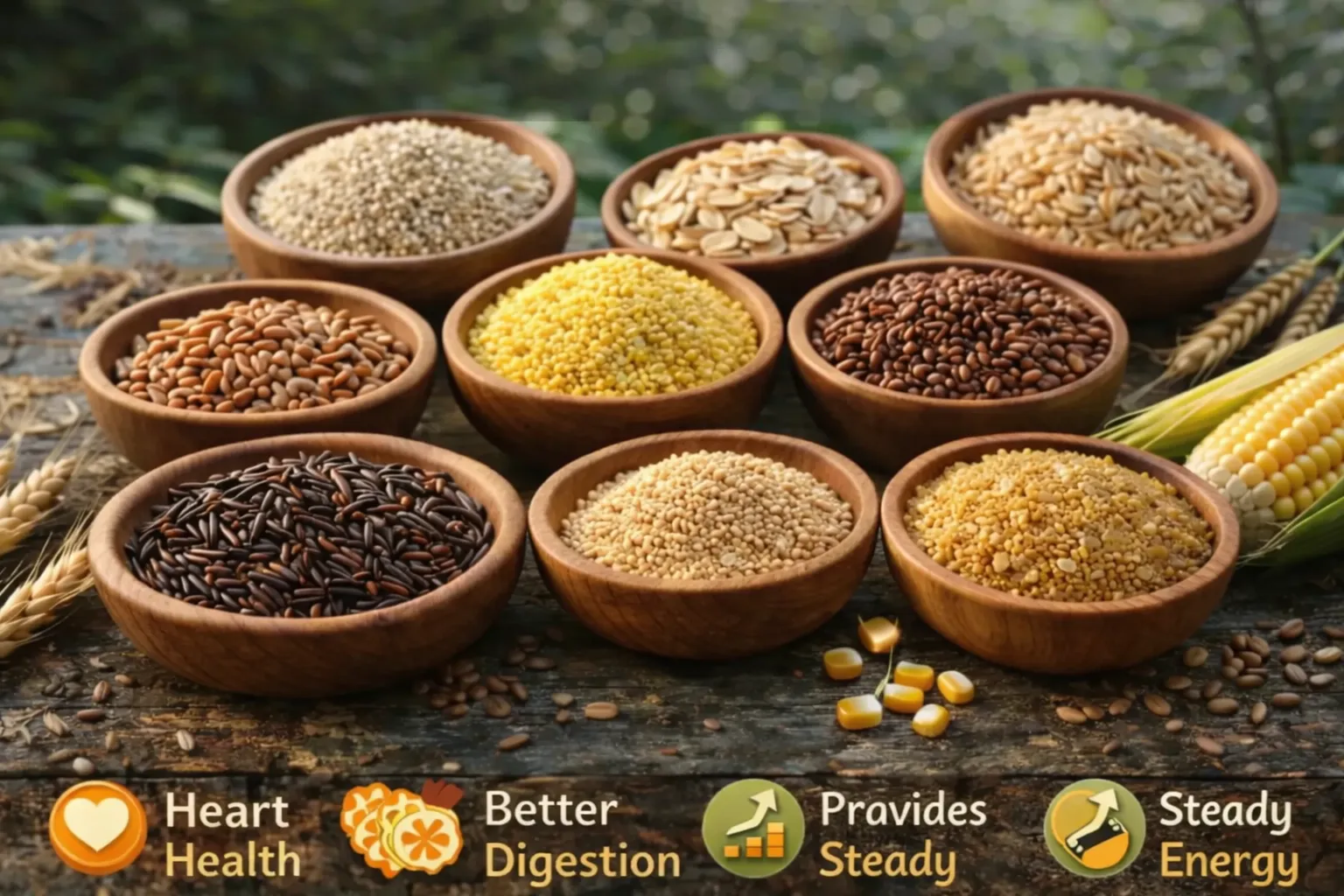
The addition of different types of whole grains to your meals can help your digestion, keep your energy levels steady, and contribute to your general well-being. The next thing is a basic guide to the widely used whole grains and their place in daily eating.
🌾 Common Whole-Grain Foods
Amaranth
A tiny grain but extremely nutritious, mainly because of its high content of protein and fiber. Amaranth is a naturally gluten-free grain that can be used in making porridge, salads, or as a rice substitute.
Cook amaranth in water or milk. Add fruit, nuts, and a drizzle of honey.
Barley
Barley is a type of grain that is known for its chewy texture and is very high in fiber, which helps with digestion. It is commonly found in soups, stews, and grain bowls.
Barley should be boiled to be very soft and then mixed with vegetables, olive oil, and spices or herbs.
Brown rice
Brown rice is a whole-grain version of rice and has the bran layer still attached, meaning that it has more fiber and minerals and provides a steadier form of energy, making you feel full longer.
Brown rice should be added to a mixture of sautéed veggies, and then light soy sauce or lemon juice can be used for drizzling.
Buckwheat
Buckwheat, like the other grains described above, is gluten-free, but unlike them, it has high antioxidants. It is often used for porridge, pancakes, and noodles such as soba. Bulgur is another type of grain. It is made from cracked wheat and cooks quickly. It is often used in salads such as tabbouleh and is a great source of fiber.
Buckwheat would be cooked and mixed with yogurt and fruit, or it can be added to a savory bowl.
corn
In its full form, corn is thought to be a whole grain that provides fiber, antioxidants, and a natural sweetness. Corn is a very adaptable food and can be eaten in several different ways, including fresh corn, popped corn, and ground corn. Corn has many health benefits if eaten in these forms.
Corn should be sautéed with olive oil, garlic, and spices or herbs to make an easy-to-make side dish.
Farro
Farro, an ancient grain, has a nutty flavor and chewy texture. It is good for protein and supplies a lot of fiber because of its high fiber content. It is also suitable for salads and warm bowl meals.
Farro would be cooked, and then it would be put on vegetables, roasted, and drizzled on top with some olive oil.
Millet
Millet is a tiny, gluten-free grain that is effortless to digest and rich in minerals. Millet can be served as porridge, flatbread, or even with a savory dish.
Millet would be cooked in water or milk. And after cooking, it can be sprinkled with nuts, seeds, or pieces of fruit on top! Enjoy!!
Oatmeal
Oatmeal is the result of processing whole oats. One of the positive effects of fiber in oatmeal is on heart health. Oatmeal provides you with energy that is consistent throughout the day, helps digestion, and keeps your stomach healthy.
Oats should be cooked in water or milk, and then toppings like sweetened fruits and/or nuts with nut butter can be added.
Whole Wheat Bread
Whole wheat—one of the best ways to make the most of a whole-food diet is to make sure you have all of your essential vitamins and minerals available in whole-wheat bread. Additionally, always check to see if the word "whole wheat" is the first ingredient in your product.
Whole wheat bread would be toasted with any combination added.
Whole-Grain Pasta
Whole-grain pasta is significantly denser in fiber than regular pasta and is excellent at contributing to digestive health while providing energy over sustained periods.
Olive oil, garlic, vegetables, and herbs are perfect for mixing.
Wild Rice
Though botanically, wild rice falls into the grass family, it has many advantages over other types of food when it comes to being eco-friendly with an abundance of minerals, fiber, and antioxidants. It has an outer texture reminiscent of a whole grain and pairs well with vegetables and proteins.
Herbs and roasted vegetables can be combined with cooked wild rice.
🌿 A Harmonized Strategy
Whole grains are nothing but the source of nourishment—no more restrictions for you. When you eat a wide range of grains, your body can get different nutrients, and at the same time, you can enjoy non-repetitive and diverse meals.
eateriq is of the opinion that knowing your food practically will enable you to choose confidently and thus maintain a balanced diet. Whole grains are such a straightforward method of promoting general health that you do not need to be mindful of what is on your plate.