Understanding Additives and E-Numbers: Are They Safe?
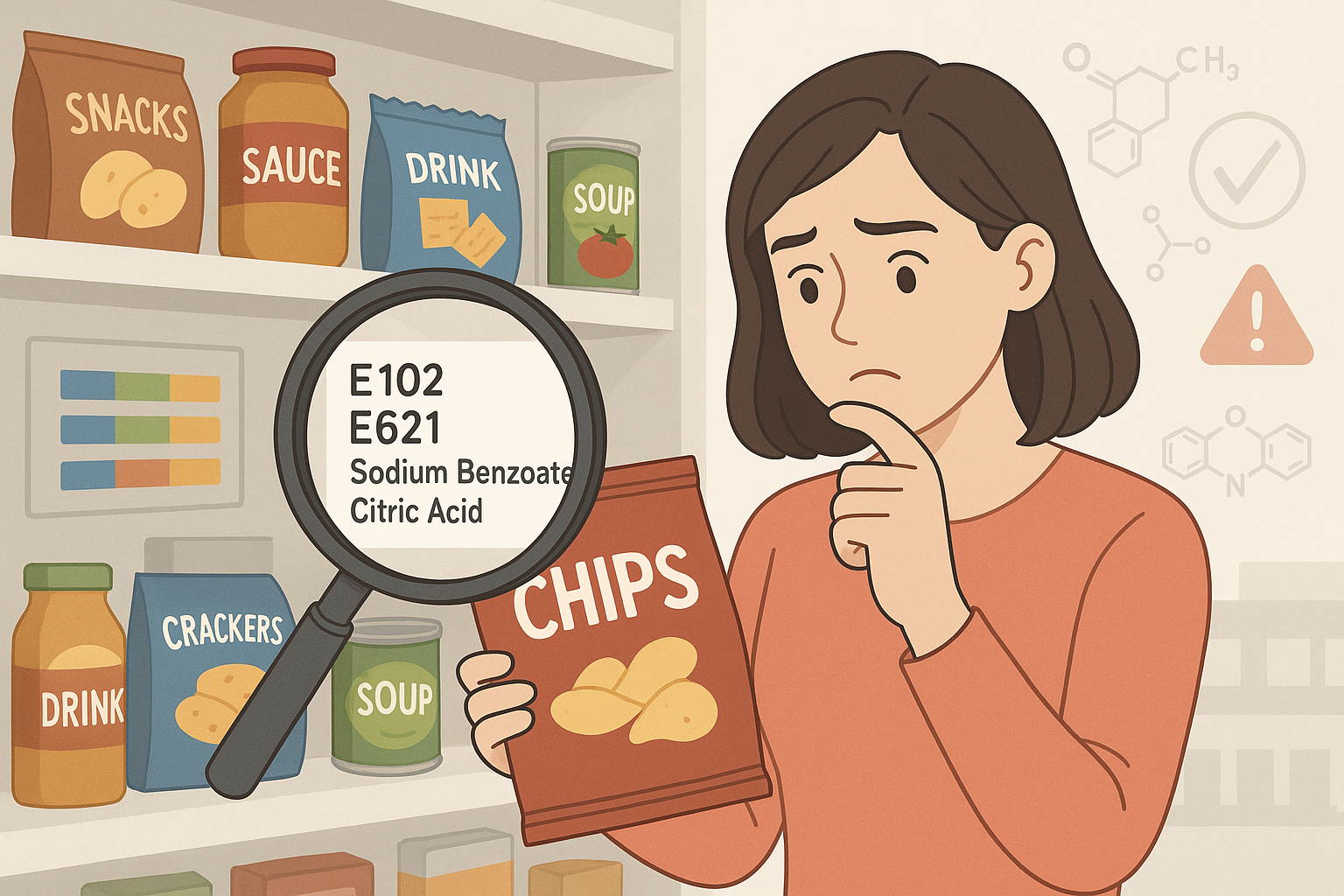
Food packaging is confusing enough, not to mention when you're faced with enigmatic codes such as E129 or E322. These are "E-numbers"—food additive codes used in ingredient lists, particularly on European or international brands. But what are they, how are they regulated, and how can you determine which are safe for your diet? Let's break it down.
E-numbers are EU-approved standardized codes for food additives that have been recognized in most countries all over the world. Each E-number represents a certain additive, color, preservative, antioxidant, or emulsifier—added to enhance the shelf life, appearance, or texture of food.
What Are E-Numbers?
Food additives that have undergone testing and received approval for use throughout the European Union are identified by their E-numbers. After the letter "E," which stands for "Europe," comes a number that represents a particular additive. These codes guarantee uniformity on ingredient labels across languages and nations and aid in the simplification of complicated chemical names.
Every food additive needs to pass stringent safety testing and be approved by the European Food Safety Authority (EFSA). Following approval, they are given an E-number and are bound by EU laws, specifically Regulation (EC) No 1333/2008.
In 1962, the E-number system was first used, initially for food coloring. Preservatives (1964), antioxidants (1970), and chemicals such as thickeners, stabilizers, and emulsifiers (1974) were added over time.
The additive's E-number and function are frequently listed on ingredient labels; for instance, ascorbic acid, also known as vitamin C, is listed as "antioxidant (E300)" on ingredient labels. Regardless of language or nation, this system not only makes labeling simpler but also makes it easier for consumers to recognize additives.
A Brief History of E-Numbers
The E-number system was first adopted in the 1960s by the European Economic Community (now the EU) in order to establish a common, science-based framework for regulating food additives. The system provides consumers in various languages with an easier way of being able to tell which additives are in their food.
Are E-Numbers and Additives Safe?
The FDA, EFSA, and WHO are among the food safety agencies that have thoroughly tested and approved the majority of additives. However, dosage, frequency, and individual sensitivity frequently affect safety.
Here are a few E-numbers:
Generally Accepted as Safe (GRAS)
Associated with negative health effects when ingested in excess
Some countries have banned or restricted it because of newer evidence.
How to Remain Safe and Informed
Examine the label: The fewer additives used, the better.
Use Eateriq or similar tools to quickly scan products and flag ingredients, including those with questionable E-numbers.
Keep an eye out for recognized triggers, particularly if you suffer from allergies, migraines, or sensitivities.
Select minimally processed foods: Lean proteins, whole grains, fruits, and vegetables almost never contain unidentified additives.
Common Additives (with Examples using E-Numbers)
1. Preservatives
Used to inhibit spoilage and increase shelf life.
E200 (sorbic acid) is used in baked foods, cheeses
E250 (sodium nitrite) contained in cured meats (flag: potential link to cancer if overused)
2. Coloring
Increase the attractiveness of food, particularly for sweets and snacks.
E102 (Tartrazine) yellow coloring, contained in sodas and sweets (flag: may cause hyperactivity in children)
E160a (beta-carotene)is a natural coloring from carrots and is generally safe.
3. Flavor Enhancers
Increase or replicate natural flavor.
E621 (monosodium glutamate / MSG) is commonly found in savory snacks and instant noodles (flag: can cause headaches or nausea in sensitive people).
4. Sweeteners
Utilized in sugar-free or low-calorie foods.
E951 (Aspartame) is a hotly debated sweetener utilized in diet drinks (flag: avoid if phenylketonuria is present).
E960 (Steviol glycosides), obtained from stevia leaves, is generally safe.
5. Thickeners & Stabilizers
Prevent change in texture in sauces, yogurts, and ice creams.
E415 (xanthan gum) is widely used in gluten-free products.
E407 (Carrageenan) found in dairy substitutes (flag: some research indicates it can cause irritation to the lining of the gut)
Conclusion
E-numbers aren't bad at all - they are just a way of labeling foods for safety in foods. But informed people can differentiate the harmless from the sometimes questionable.