Top 7 Harmful Ingredients Hiding in Your Packaged Foods (And How to Spot Them)
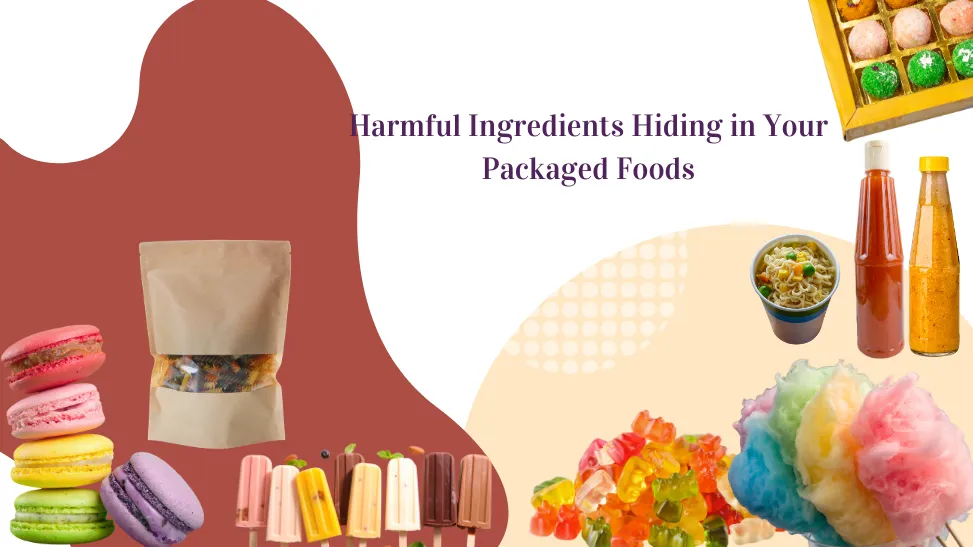
7 Toxic Ingredients in Your Packaged Foods (And How to Identify Them)
Foods that are packaged save you time and effort, but the slimy, shiny wrappers don’t promise good health. Wrapped foods, especially the processed ones, come with many ingredients, some of which can destroy your well-being in the long run. Such ingredients are often covered with difficult names and false advertising. Being aware of such things can greatly improve your food choices and safeguard your health. Here are the seven ingredients that are a threat, which you are likely to find in packaged foods—and how you can spot them.
1. Trans Fats
You’ll find these fats most in baked goods, fried foods, and margarine. They are the product of partial hydrogenation of oils. As opposed to what is beneficial to the body, these fats help in the storage of food for longer periods and increase the risk of heart disease as they raise the “bad” cholesterol, or LDL, and lower the “good” cholesterol, or HDL.
How to find: Make sure ‘partially hydrogenated oils’ and ‘vegetable shortening’ do not appear on the ingredients list. This is particularly critical for processed products that advertise ‘0g trans fat,’ as they often contain trans fat due to lenient regulations.
2. High Fructose Corn Syrup (HFCS)
You’ll find this syrup in sodas, sweets, sauces, cereals, and even bread! This is the leading cause of obesity, insulin resistance, metabolic syndrome, and even fatty liver disease.
How to find:Check labels for the terms “high fructose corn syrup,” “corn syrup,” or “glucose-fructose syrup.” It can even be present in 'natural' products.
3. Artificial Sweeteners
Sucralose and saccharin are some of the more popular ones that we as the consumers hear of. These, along with aspartame, are known to vigilant consumers as some of the more well-known artificial sweeteners that appear in sugar-free products.
4. Refined Grains
In most cases, grains are treated as refined. Like carbohydrates, refined grains have fiber, vitamins, and minerals stripped away from them. Their carbohydrates are designed to be absorbed rapidly. This is not a good thing because it, in turn, elevates blood sugar levels, leading to increased chances of type 2 diabetes and obesity.
How to identify them:Foods made of “100% whole grain” or “whole wheat” are sources of good grains. Steer clear of “enriched flour,” “wheat flour,” or even just “flour” unless it is preceded by the word “whole.”
5. Excessive Sodium
Sodium is abundantly found in prepackaged soups, instant noodles, certain frozen meals, and snack chips. It is known that consuming excess salt leads to increased blood pressure and elevated risks for heart attacks and strokes.
How to Identify Them: Check the Nutrition Facts panel. If one serving accounts for more than 20% of the daily value (DV) for sodium, it is labeled as high sodium. Other than that, hidden ingredients like monosodium glutamate (MSG), sodium nitrate, and sodium phosphate are also to be checked.
6. Synthetic Colors and Flavors
Snack foods and cereals use Red 40, Yellow 5, and Blue 1 synthetic colors. The colors relate to attention deficit disorder in children and, especially when used together, are linked to the long-term risk of chronic disease. The synthetic flavors mask the lack of the ingredient.
Indicators of synthetic colors and flavors: Look for colors that have a number associated with them, like Red 40 or Yellow 6. Also look for products that state "artificial flavors" instead of spices, fruits, or herbs.
7. Preservatives and Additives
Sodium nitrite, BHA (butylated hydroxyanisole), and BHT (butylated hydroxytoluene) have been associated with cancer, hormone disruption, and all other negative health effects. All three can be found in shelf-stable products.
Indicators of preservatives: When deciphering ingredients, look for a full chemical name or abbreviation. The baked meat products, packaged snacks, and frozen food items will always mostly contain preservatives.
How to Avoid Being Misled by Food Labels
Food manufacturers are quite fond of using words such as "healthier," "natural," or "low-fat" on their product labels because such products tend to sell better. In addition to concocting other ingredients that ensure the product is anything but healthy, they engage in a different form of ingredient 'engineering.' Below are a few steps that can be taken in order to reduce the chances of being misled by such labels:
- Don’t make snap decisions. - Read the ingredient list and the Nutrition Facts panel instead of just the front.
- Try eating foods with fewer ingredients and adjust the seasoning to your palate. As a rule of thumb, less is more, so if you see simple ingredients, it is a sign that the overall food is not overly processed.
- Prepare meals when you can. When you are making your own food, you usually have an idea of what goes into it.
- Register with apps such as EateriQ. With EateriQ and other similar apps, you can scan a product to check if it is safe to consume or if it contains harmful additives, too much sugar, or deceitful labels.
In conclusion,
While there is no need to give up on any of the prepackaged foods that we like, there is a need to know what they have. After you get to know the seven hidden dangers, you will be more aware of how you can cut down on sugars, artificial additives, and unhealthy fats.