The Rise of Food Allergies: What Every Shopper Should Know
The Growing Concern of Food Allergies: What Every Consumer Needs to Know
Food allergies are no longer unheard of-they are a growing public health problem affecting millions of people all over the world. So if you have seen "gluten-free," "dairy-free," or "no nuts" at the front of labels in supermarkets, you know it is no passing fad but feeding an actual and growing need. Whether you bear a food allergy or do grocery shopping for someone who does, knowing how to walk safely down supermarket aisles today is of paramount importance.
How Food Allergies Got Bigger
Over the last few decades, food allergies have been growing dramatically, with children being more and more affected. According to research from the Centers for Disease Control and Prevention, between 1997 and 2011, the trend in the occurrence rate of food allergy in children in the United States went up by almost 50 percent. Up to now, the CDC estimates that 1 in 13 kids has food allergies, many retaining the allergies in their adulthood.
We do not really know for sure any specific cause of this increase. Some of the conjectures include:
The Hygiene Hypothesis - Lack of early exposure to microbes may likely predispose the immune sys
Changes in Diet - Alterations in diet, such as highly processed foods, additives, and other hidden substances in foods, may lead to heightened sensitivities.
Environmental Factors - Pollution, chemicals, and a variable lifestyle may also contribute to variations in immune responses.
Delayed Introduction of Allergens in a Child's Diet- Parents used to refrain from giving children of very young ages with common allergens such as peanuts and eggs. However, research today supports the notion of slowly introducing common allergens during infancy to reduce the risk of reactions.
In any case, whatever the cause, quite simply, it remains that there are increasing food allergies changing the way we shop, cook, and eat.
The Most Common Food Allergens
People can be allergic to just about any food; however, there are eight food allergens that account for almost all allergic reactions. These eight are referred to as "The Big Eight" (as of 2023, five sesame was added to make it the Big Nine in the U.S.):
1. Milk
2. Eggs
3. Peanuts
4. Tree Nuts (almonds, cashews, walnuts, etc.)
5. Soy
6. Wheat
7. Fish
8. Shellfish
9. Sesame
Food manufacturers in many countries must clearly label these allergens. However, hidden sources and cross-contamination are concerns shoppers must navigate.
Issues Shoppers Experience
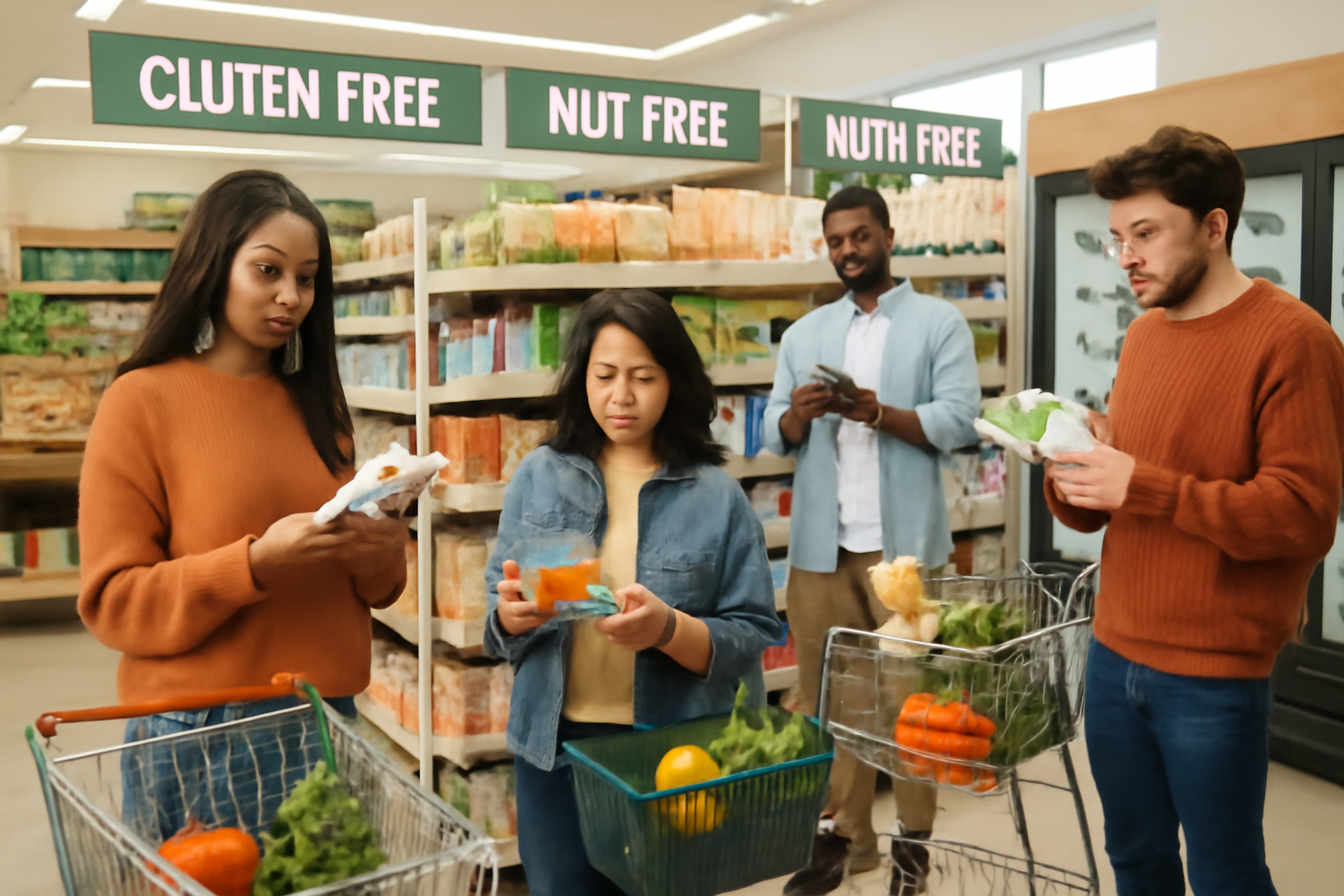
A grocery trip can be daunting for an individual living with a food allergy. Reading ingredient lists is now a must-read policy, but there are still hurdles to jump:
Hidden Allergens - There are examples like, milk has many names, e.g. casein, or whey, and gluten may be hidden in additives, sauces, and flavorings.
Cross-Contamination - A product may not contain an allergen but the company may be manufacturing in a facility that processes allergens.
Unsubstantiated Health Claims - "Natural" "Organic" or "Healthy" do not mean allergen-free.
Changing Recipes - Due to food trends manufacturers change recipes without notice, so a product could switch from "safe" to "unsafe" in the blink of an eye.
What Every Shopper Should Know
If you have allergies, shop for someone with allergies, or just want to be more knowledgeable, here are some valuable things you should know:
1. Read labels carefully
Always check the ingredient label and allergen statements like "contains peanuts" or "processed in a facility with nuts." Make sure you know other possible names allergens can go by.
2. Pay attention to cross-contact warnings
If there is a "may contain" or "manufactured in a facility that also processes," take those statements seriously. Even tiny amounts of that allergen may have a reaction for those at risk.
3. Look for allergy-friendly brands
There are many companies today that specialize in allergen free foods. These brands typically go beyond what is required for labeling and are likely more safe.
4. Make sure to take care with bulk bins
Bulk bins can be attractive but risk for cross-contamination. A scoop that was used for nuts may also be used for seeds, grains or another allergen.
5. Check again
Recipes or manufacturing practices could be changing. Always check the labels, even on products you have bought before.
6. Shop more wisely online
Grocery shopping can be stressful. Most online retailers now have the ability to filter your search by allergens. Shopping online can be less stressful and safer! Tools like eateriq can also help by letting you scan products instantly to see if they are safe, saving time and reducing the risk of hidden allergens.
A World Where Allergens are Not at All Welcome
Food allergens have transformed grocery shopping, as well as restaurants, schools, and food manufacturing. One side effect of these food allergens is that they have made life more difficult for those that have them. But, allergens have also been and are pushing for change (not always for negative reasons): clearer labeling laws, more achievable awareness, and more allergen-free food products do exist now than ever before for consumers.
For families who have allergies and allergies to manage, rigorous shopping and planning can offer all those people choices. It does demand that those individuals "step up and do their part" because sometimes it can be tedious, but to eat well, be safe, and to enjoy the variety of food that is offered can be managed if you work just a little bit harder.
The Bottom Line
Food allergies are not a fad, but an unfortunate issue that keeps growing in scope and affects the shopping of millions of people. Food shoppers need to know critical information about food allergies - either what to avoid and which labels are good/bad food. Knowing the good from the bad, however, will make food shoppers a more safe shopper.