The Problem with Health Buzzwords: ‘Natural’, ‘Organic’, ‘Low-Fat’
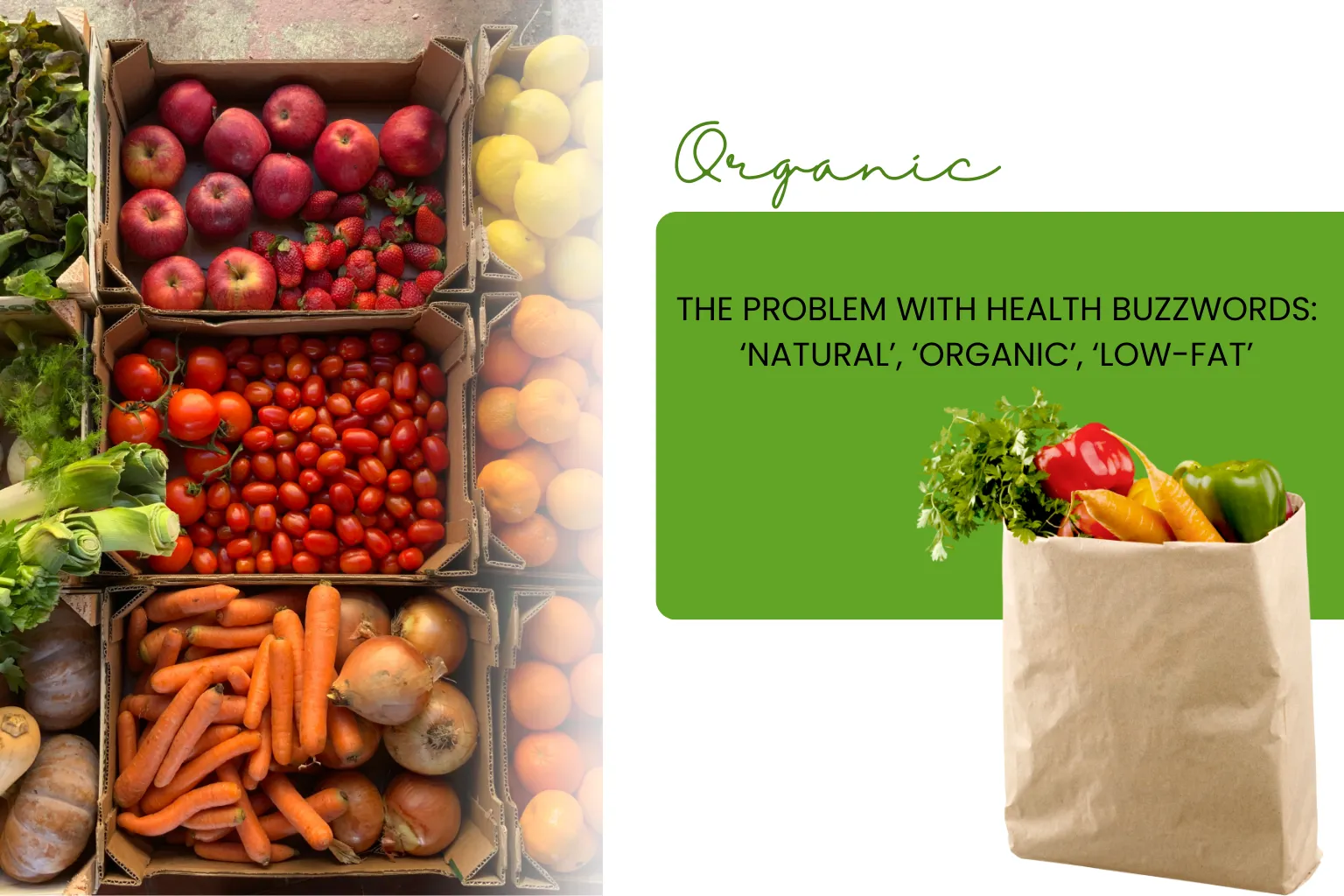
The Problem with Health Buzzwords: ‘Natural,’ ‘Organic,’ and ‘Low-Fat’
Health buzzwords such as 'natural,' 'organic,' and 'low-fat' dominate food ads these days. These assertions of health benefits aim to attract consumers' attention during their shopping journey. Then again, these words generate confusion and end up making the consumer believe something that simply is not true. Such claims may direct someone in the wrong direction, picking something that is not healthy. So we need to know what these words mean. Thus, we can help select better foods for consumption.
By contemplating who decides a term is legitimate and whether or not you trust their declarations, you may be better able to sort through the jargon and draw your own conclusions. Maybe we ought to trust each person to decide for themselves. In fact, learning through someone else's research can lead to poor outcomes based solely on their decisions.
With all these implications in mind, let's take a glance at the differences between a few terms, or buzzwords, you may encounter when shopping.
Myth #1: Natural means healthful and unprocessed.
Fact: The term "natural" is openly used, meaning there is little regulation, and in many instances, it sells a device with fewer processing approaches than the organic label. Commonly, "natural" means there's some low level of processing in an ingredient list, or at the very least, it's wholesome. When a product is labeled as "natural," it may contain some natural ingredients, but it can also include conventional additives or highly processed ingredients. "Natural" is mostly a marketing push with some safety, nutrition, and general food factors (really) as a regulatory standard.
Myth #2: Organic means better nutrition.
Fact: Organic is much more about organically produced foods, which, where available, will be produced without the addition of synthetic pesticides and fertilizers, or there may be some animal welfare guidelines. Organic does NOT mean it is better nutritionally in any way, nor is any organic food ingredient calorie-free. Organic sugar is still sugar, just like any other type of sugar. Organic processed foods can contain high amounts of sugar, salt, and fat, like any other processed food.
Myth #3: “Low-Fat” = Low-Calorie, Healthier
Fact: It is a common belief that "low-fat" means that a food would be considered a healthier option. However, many of these "low-fat" items made sure to replace that fat by loading them with additional sugar, salt, or artificial additives to maintain taste; sometimes these low-fat products can be just as calorically dense or even less healthy than the non-low-fat version you would be leaving on that shelf.
How a Smart App Cuts Through the Marketing of Labels
Apps like Eat IQ empower the consumer to scan foods to find out what's actually inside that product. Don't just trust the health buzzwords. Eat IQ helps consumers see hidden sugars, unhealthy fats, allergens, preservatives, and overall nutrition quality, so you can make informed choices factually—not by a tagline.
Bottom Line
Do not fall for health buzzwords! Always read the full ingredient list and the nutrition facts panel to start seeing the entire picture of what you're eating. Technology can be a client advocate when it comes to label marketing and helping choose foods that will not only help you get healthier but also stay healthy.
The Eat IQ App clarifies food marketing by cutting through the confusion created by buzzwords.
Buzzwords are meant to distract; Eateriq does the opposite and gives you fact-based, transparent information to help you make informed decisions.
Ingredient List Breakdown: Scans for hidden sugars, preservatives, and processed additives that are disguised with marketing buzzwords.
The Nutrition Breakdown feature presents calories, macronutrients, and micronutrients, enabling you to understand the true nutritional value.
Additive and Allergen Warnings: This feature highlights E-numbers, common sensitivities, and allergens that may be obscured by large, friendly marketing terms.
Tailored Alerts for Dietary Restrictions: If you have dietary restrictions, the system will warn you about suspicious ingredients, even if those ingredients appear healthy.