Keto, Paleo, Vegan, Diabetic-Friendly: What Do These Diets Really Mean?
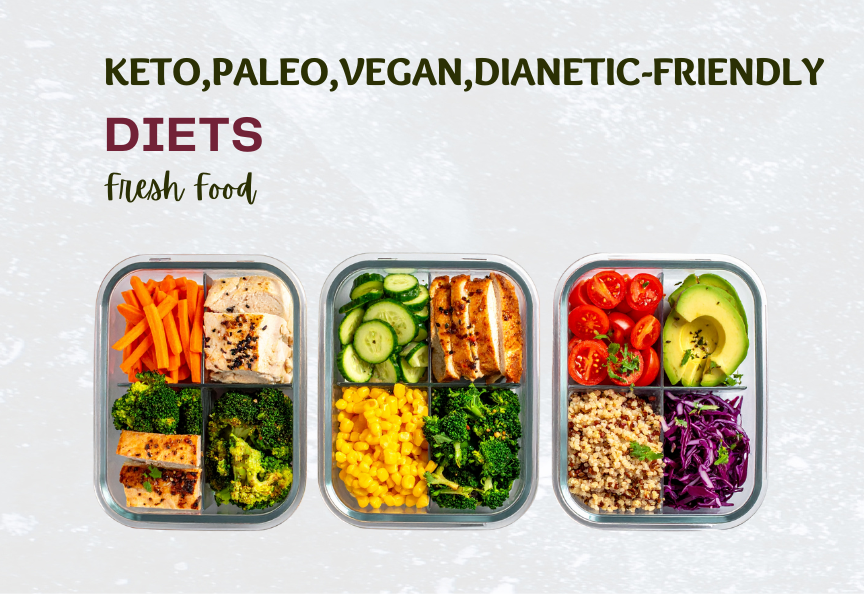
Food and nutrition trends are constantly evolving and discussions about health usually lead to discussions of eating patterns. In the course of examining all these different eating patterns we have had the opportunity to focus on four specific trends which were most prominently on everyone's minds: the Keto diet, Paleo diet, Vegan diet, and Diabetic-Friendly diet. Each of these eating patterns have their own identity and purpose, but they all share the goal to promote health, improve health, lose or maintain weight, or live according to their values. In exploring any diet that includes these, while undeniably a very complex topic, falls outside of the scope of this article, but we will at least be able to describe the major principles that each diet applies to the kinds of foods they include and typically prefer.
1. The Keto Diet
The Ketogenic Diet is a high-fat, low-carb eating plan. Sometimes called "keto" for short. Keto diets are good for weight loss and may be helpful for diabetes and cardiovascular disease.
Ketosis happens when your body begins using fat instead of carbohydrates for energy. When you eat too many carbohydrates or sugars (which turn into glucose), your body releases insulin to break these foods down into usable energy in the form of glycogen. Glycogen is a type of sugar that is stored in the liver and muscles. But, when you have very few carbs to burn for energy, your body uses its own fat stores instead. That process creates chemicals called ketones that your body uses for energy instead of glucose/blood sugar rises again after eating low-carbohydrate foods--like meat, poultry, fish, eggs cheese, nuts, butter, olive oil, coconut milk, avocado, avocados, olives, leafy greens, broccoli, cauliflower, cabbage, spinach, kale, Brussels sprouts, collard greens, swiss chard, bok choy, kombu, seaweed, kale, romaine lettuce, iceberg lettuce, eggplant, mushrooms, onions, leeks, garlic, scallions, artichok.
2. Paleo Diet: Eat Like a Caveman
Paleo means "from our ancestors." It is a diet that is not a vegan or vegetarian diet, but can easily be adapted to be plant-based.
Paleo and Whole30 are very similar, as they both are based on foods in their simplest versions (no processed foods). The main difference between both is that Paleo does not include legumes and dairy, while Whole30 allows some dairy like kefir or ghee (no other dairy).
Keto is like Paleo, but its high fat focus rather than protein focus is what makes this different from the others. Keto allows you to consume alcohol in moderation too--most healthy eating plans do not incorporate that!
3. Vegan Diet: Powered by Plants
If you are considering changing your diet to vegan you need to know the health benefits and dangers of a vegan diet. Vegan excludes all food that is of animal origin. Vegan diets do not include meat, fish, poultry, or eggs. Vegan diets do not include dairy, including milk and cheese. (with limited exceptions).
Vegan diets have a lot of fruits and vegetables and they use legumes (beans), nuts, and seeds that are full of vitamins and minerals. Many followers of a vegan diet report feeling better than they felt before going vegan - they state the energy they experience is different because they are getting enough nutrients in their bodies without having too much saturated fat that typically comes with animal products.
Many people elect to be vegan because they want to lower the level of animal products in their life for ethical considerations, including concern about the welfare of animals or environmental sustainability related to issues of raising livestock related to food production.
4. Diabetic-Friendly Diet
A diabetic-friendly diet isn't a universally prescribed diet. The label generally means a balanced variety of whole foods eaten in approximately moderate portions that help you to manage your blood sugar levels. The general premise:
Eating whole grains, fruits, vegetables, legumes, nuts, lean protein
Limiting or avoiding simple sugar sources, refined carbohydrate sources or highly processed foods;
Eating at regular mealtimes and paying attention to energy intake to address obesity and manage general eating;
Carefully managing carbohydrate intake (quantity and type) to maintain even blood sugar levels over time.
Every day these basic healthy eating practices are going to be good for everyone, and a registered dietitian can find ways to maximize your individualized approach.
EaterIQ Flags Diet Compatibility
EaterIQ is a gamechanger for managing diets and food configurations. Rather than simply scanning barcodes, EaterIQ goes beyond the barcode scanner to analyze various types of food labels. Here is the process with EaterIQ:
Label Scanning: Take a picture of any label, and EaterIQ has builtin multilingual options.
Ingredient Analysis: The app's AI and Optical Character Recognition at work reads each ingredient.
Intelligent Comparison: Each ingredient is compared against a database, based on hundreds of health and dietary parameters.
Personalized Reporting: You receive a breakdown with a health score, warning of potential allergens, and clear indicators to diet compatibility (e.g., “Vegan,” “Keto,” “Paleo,” “Diabetic-Friendly,” etc.).
Unbiased, Focused on Ingredients: The EaterIQ app compares ingredient lists by reviewing an actual ingredient list, instead of a scanner than compares the database (which is often incomplete). As a result, users can accurately, and reliably match their diets, no matter what item they scan, even if it's an obscure, international product.