How to Read Food Labels: A Complete Beginner’s Guide
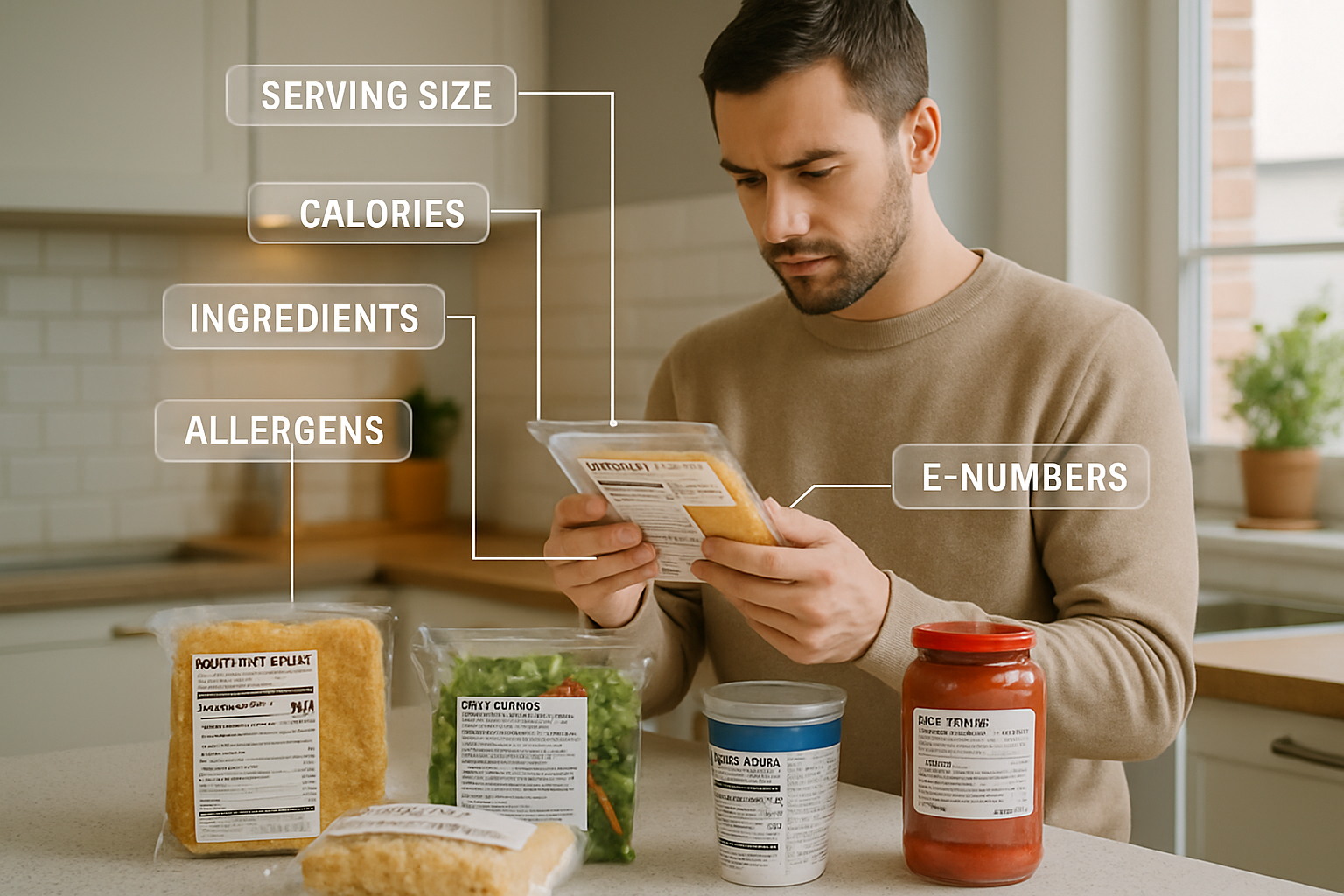
Develop your ability to confidently and clearly read food labels. To help you make better, more informed food choices, this easy-to-use guide breaks down ingredient lists, serving sizes, nutrition facts, and hidden additives. This guide will make it easier for you to understand food packaging, whether you're trying to eat healthier, cut back on processed foods, or watch how much sugar you consume.
Reading Labels: Understanding Fats, Cholesterol, and Sodium
When examining the fat content of a product, pay attention to the fat's type. Select foods that include more monounsaturated and polyunsaturated fats, which are beneficial to the heart. Restrict your consumption of saturated fats, which are readily located in meats and dairy products, since they increase LDL (bad) cholesterol and can enhance your risk of heart attack or stroke by promoting the formation of blood clots. Trans fats are even worse than that—they not only increase LDL but also decrease HDL (good) cholesterol, so they are particularly bad.
Sodium is another that needs to be watched. Consuming excessive amounts of sodium will cause high blood pressure, a big risk factor for heart disease. The American Heart Association suggests limiting sodium to 1,500 mg per day. Most packaged foods and processed foods—such as canned soup, frozen dinners, and salad dressings—are loaded with concealed sodium. To decrease intake, use fresh or frozen vegetables and think about making your own dressings and sauces at home.
Front-of-package (FOP) labels
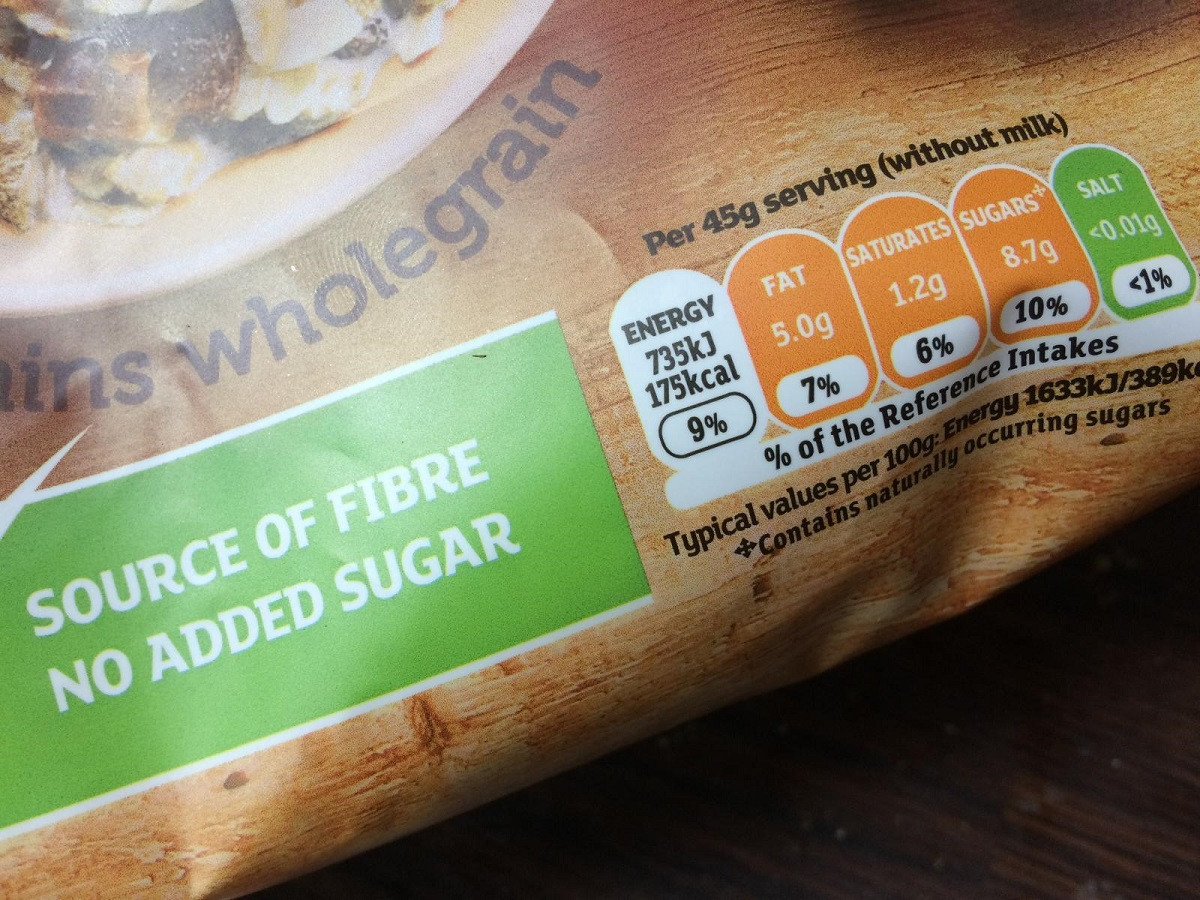
Front-of-package (FOP) labels are frequently the initial item that buyers notice when they are reaching for a product and may significantly sway purchasing decisions in a matter of seconds. Because of this, FOP labeling has been a contentious arena, where food companies and health professionals tend to disagree. Brands will accentuate good features—such as "low fat" or "rich in fiber"—in order to market their brand as healthy, bypassing less desirable information, including high sugar or sodium content. These discretionary claims have the potential to deceive consumers into thinking that a product is healthier than it is. While the nutrition Facts panel is tightly controlled by the FDA, FOP claims are more loosely regulated, allowing companies the opportunity to influence perception. Mandatory warning labels—red symbols or traffic light labeling—have been considered in some countries to more clearly alert consumers to high sugar or high fat content. Proponents say that mandatory, uniform FOP labels in America might spur healthier products and offer better direction to consumers.
Allergy information
Food labeling for allergies is also essential in safeguarding consumers from potentially lethal reactions. Under the Food Allergen Labeling and Consumer Protection Act of 2004, manufacturers are required to list explicitly the existence of these eight major allergens—milk, eggs, fish, shellfish, tree nuts, peanuts, wheat, and soybeans—by a "contains" label close to the ingredient statement. For instance, labels would state "contains milk and peanuts." Further, precautionary statements such as "may contain" or "processed in a facility that also processes tree nuts" are commonly employed to speak to the cross-contamination risk.
With the FASTER Act passing in 2021, sesame was included as the 9th major allergen, and it must be disclosed on packaged foods beginning January 1, 2023. Some of the other significant ingredients are FD&C Yellow No. 5, which is required to be named particularly if it's being used, because there could be allergic reactions. The label can also feature voluntary descriptions such as "gluten-free," but only if the product passes strict FDA-defined gluten levels.
You could fool yourself into consuming unhealthy foods that are seriously harming your health if you don't read the ingredient list.
It's simple to fall into the trap of consuming foods that appear healthful but are actually high in sugar, additives, and highly processed ingredients when you don't read ingredient lists. We understand that reading every label at the store can be overwhelming. However, you are not required to complete it all at once. Build the habit gradually by starting with a small number of products per trip. Reading labels will come naturally to you soon.
I was surprised to discover how frequently sugar appeared in the top three ingredients when I first started paying attention to ingredient lists. This included granola, sauces, and even purportedly "healthy" snacks. Front-of-store marketing claims can be extremely deceptive. For this reason, I now use EateriQ, a tool that allows you to scan any barcode and view a health score based on the nutritional value, ingredients, and additives. It eliminates uncertainty when shopping and makes it simpler to identify hygienic, reliable products.
EateriQ is revolutionary if you want to make better food choices, save time, and lessen decision fatigue. Grocery shopping becomes much simpler, quicker, and less confusing once you get the hang of it.