How AI Is Revolutionizing How We Eat
Artificial intelligence (AI) is first and foremost transforming our relationship with food: the food we eat, as well as the dumb kitchens we rely on to prepare food, into something smarter, safer, and more personalized. Through the combined use of optical character recognition (OCR), machine learning, and applications like Eat IQ, we are using technology to advance food intelligence to ever-increasing scales.
The Digital Lens: OCR as the Portal into Food Intelligence
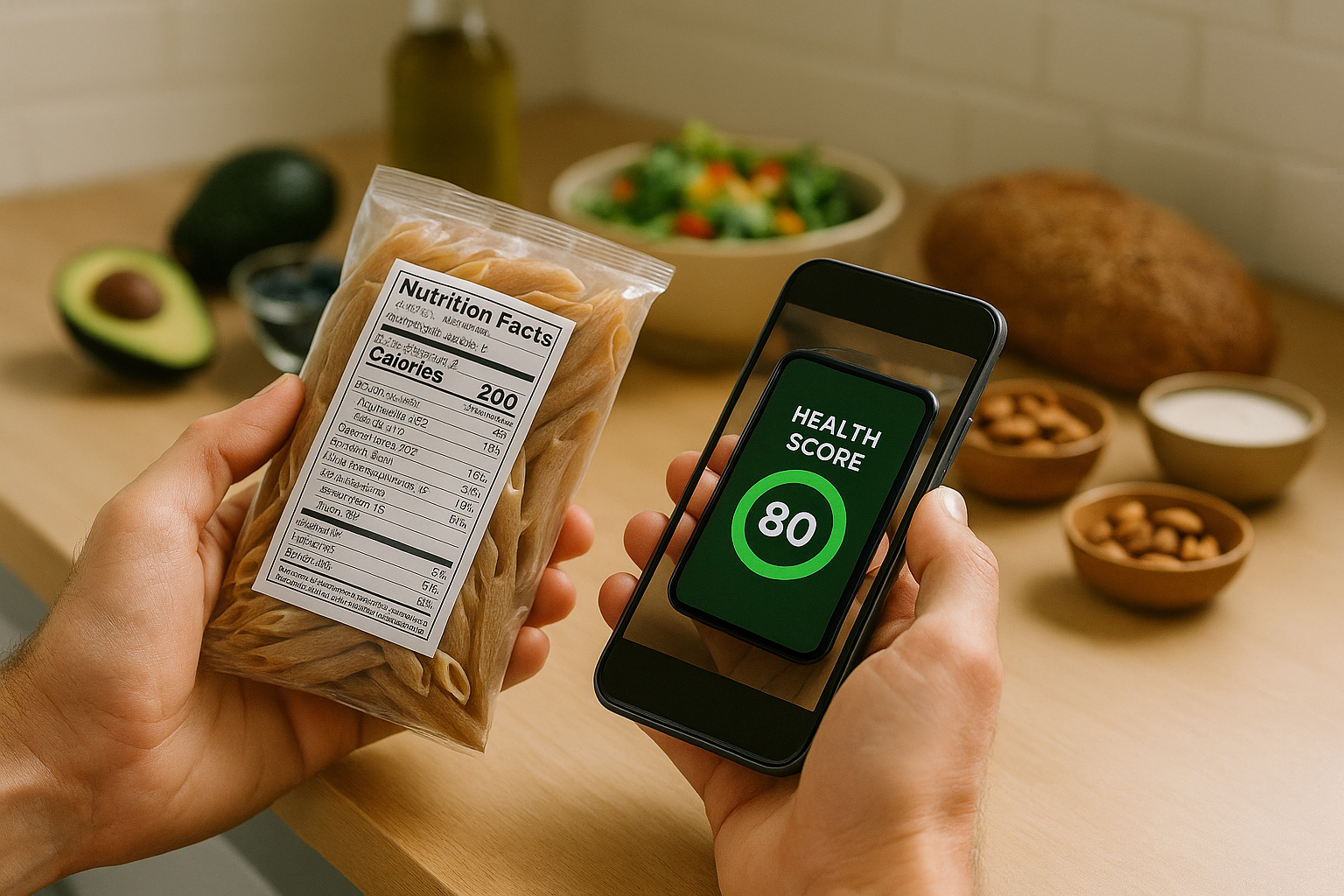
Optical character recognition, or OCR, is a critical technology that allows computers to read text that appears in or on an image. Nutrition labels on packaged foods, food choices on restaurant menus, and ingredient lists on recipes are just a few common examples of OCR applications. In the past, you could track what you ate either by manually logging it in or by deciphering complicated food names. Food apps today enable products with high-end OCR to do this at the point of purchase or consumption for you: basically in real time as you scan a package or photo of a dish.
The integration of OCR technology is important not only because speed matters, but also because the reliability and accuracy of what you intend to eat, or have eaten, is captured and has become part of the systems that govern smart food systems. The data from these digital assets is more reliable, and that data will drive deeper analytics, which then will lead to machine learning.
Machine Learning: The "Intelligence" in Smart Food
In addition to actually gathering data, the next step is understanding and taking action on that data—this is where machine learning comes into play. Machine learning makes use of immense datasets—taking advantage of dietary diaries, health records, or millions of recipes—to uncover patterns and form recommendations as needed.
A few ways that machine learning could be used in the food world include:
AI systems can analyze the dietary needs of individuals, suggesting meal plans that take into account an individual's biometric data, likes, dislikes, allergies, and lifestyle.
Algorithms may be able to observe food production lines in near real time and use computer vision (assisted by OCR in many cases) to flag contaminants, improper labeling, or possible allergens, thereby enhancing food safety.
Machine learning may be able to enhance supply chains by predicting the needs of businesses more accurately, thus minimizing food waste and clarifying logistics.
Additionally, machine learning does not simply replicate existing knowledge but builds onto it. AI models could predict new combinations of flavors, create recipes using available ingredients, or even replicate flavor profiles to create new eating experiences.
Eateriq: Making food smarter one bite at a time
EaterIQ is an example of what these technologies could mean in a practical way. While the term "Eateriq" can often refer to nutritional intelligence on a broader basis, when applied to an AI-facilitated solution, these platforms are uniquely designed to deliver actionable food insights—personalized for consumers and businesses alike.
Here is how Eat IQ (and other like systems) makes food "smarter":
Eat IQ can use OCR to scan your groceries or a restaurant menu, immediately and accurately deciphering the calorie information, as well as temperatures that match (or mismatch) your goals for health.
Incorporating machine learning, it makes suggestions based on your consumption patterns, activity levels, and your unique biometric baselines. Over time, the more you use the system, the more personalized and accurate their insights into your consumption and life will be.
These technologies allow the user empowerment—where they can be in control of their life balance—but they also create a feedback loop for actions and trends throughout the food industry, whereby producers and retailers can adjust their offerings based on actual consumption demands.
Ultimately, food is now a less random, or taste-driven, opportunity, and closer to a scientific, individualized data fixed point, food action will follow.
Real-World Impact: The Rise of the AI-Infused Food Chain
AI is already being hard-wired into the food chain from the farm to your table. Precision farming is being performed by the use of drones and sensors, which are AI-driven, and invariably when that happens you are able to increase yields and decrease inputs in an exact way as previously unheard of. Smart cameras (with OCR and vision) are taking over the mundane task of food quality checks in factories and in kitchens, as they can see things that humans might miss. Places that have completely automated service, or where your food is suggested based on your dietary history, are not the future; they are being piloted today.
Even food safety is being improved: systems using AI inspection capabilities can also check for contaminants or other anomalies on production lines, reducing the risk for consumers and public health. In regard to nutrition, the personalization being afforded by AI-driven platforms is making it easier for individuals to make choices that support brain health and cognitive function, as the linking of diet to intelligence or mental acuity is substantiated through research.
Ethical, Social, and Practical Challenges
While AI will bring the world considerable benefits such as those outlined above, there will no doubt be challenges that we continue to face. Data privacy issues, algorithmic bias, and accessibility will remain concerns into the future. We face the challenge to ensure that no one is left behind in a tech food future.
AI is benevolently facilitating a transformation in our food consumption patterns, providing opportunities for producers and consumers alike in the form of powerful OCR and machine learning tools. Technologies like Eat IQ will usher in the age of data, which will allow us to know when we eat every meal, and it will not only be a meaningful bite but also a smarter one.