Difference Between Healthy Eating and Clean Eating
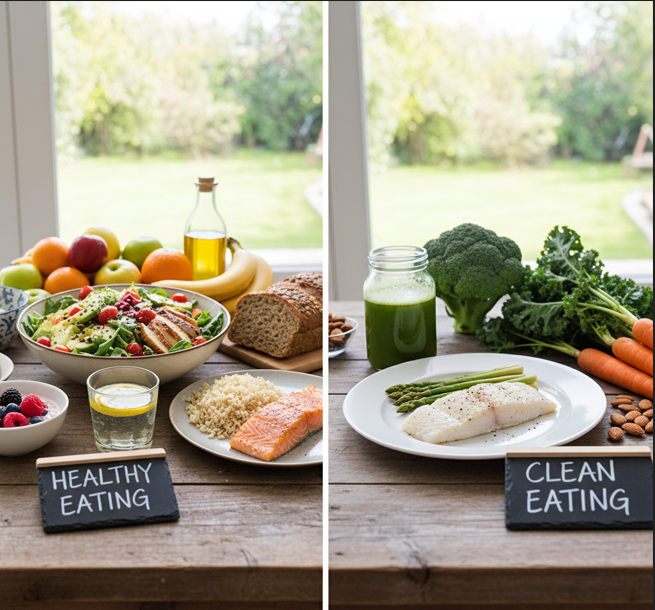
Most people tend to see clean eating (CE) as synonymous with healthy eating (HE), but they’re quite different in terms of mindset, approach, and impact on one's long-term relationship with food.
In order to be able to choose foods to nourish both your physical health and your mental well-being without feeling overly restricted or guilty, it is essential to understand the differences. At EaterIQ.com, we believe that clarity, not confusion, is the key to building a sustainable, healthy lifestyle.
Clean Eating Defined
The basic premise of CE is to consume foods that are as close to their 'natural' state as possible. Put another way, it means eating 'whole,' minimally processed foods while avoiding all food that is labelled as artificial or packaged.
CE most commonly includes:
- Fresh vegetables and fruits
- Whole grains
- Lean protein sources (such as chicken, turkey, fish, nuts, and seeds)
- Unprocessed foods without additives or preservatives
- Home-cooked meals, rather than packaged meals
However, CE generally excludes:
- Packaged snack items (such as chips and pretzels)
- Refined grains
- Sugar or sweetened foods
- 'Artificial' ingredients
- Fast food and heavily processed meals.
While CE does promote the consumption of nutritious food options, the negative aspects associated with CE can occur when CE becomes too rigid or too heavily moralized.
What Is Healthy Eating?
The concept of healthy eating is a more balanced and flexible relation to food. It doesn't ban certain foods but rather supports and promotes the key elements of nourishment, balance, and moderation as a foundation for a healthy lifestyle that lasts through time.
Eating healthily is
1. Eating a vast assortment of foods
2. Keeping the macronutrients (protein, fat, and carbohydrates) in good proportion
3. Comprising Fruits, Vegetables, Whole Grains, and Protein
4. Including snacks/processed foods
5. Eating foods that provide energy, help digestion, and contribute to general well-being
A dietary rule for eating healthily states that it does not make moral judgments about food but, instead, keeps concentrating on the permanently established habits of healthy eating. This is the gradual process of prevailing over time, where perfection is not required. On the other hand, clean eating's strict limitations are replaced by healthy eating's more open approach.
Considerable Differences Between Healthy Eating and Clean Eating:
1. Restrictions vs. Flexibility
Clean eating usually reduces the number of foods to be consumed based on the belief that they are "not clean," yet they are the ones that are still safe and healthy. Healthy eating embraces all kinds of food in moderation.
Clean eating might ban all packaged cereal, while healthy eating could allow for a high-fiber whole-grain cereal with fresh fruit mixed in.
2. Perfection vs. Balance
The comparison of "perfection" through clean eating to "balance" through healthy eating. Clean eating suggests making only "perfect" meals with whole foods. Whereas healthy eating takes into account and incorporates reality—traveling for business, travel, etc.—and therefore allows you to grab something packaged, frozen, or quick when the situation warrants it.
The primary focus of health should be on multiple meals over an extended period of time rather than just one.
3. Food Morality vs. Neutrality
Comparison of "food morality" through clean eating to "food neutrality" through healthy eating, as clean eating may create feelings of pride resulting when you eat "clean" and feelings of guilt when you do not. The practice of healthy eating does not carry the guilt associated with food. It acknowledges that food is not to be judged by its purity but as an essential part of fuel, joy, culture, and life.
4. Unsustainable Rules vs. Lifelong Habits
Whereas clean eating will become burdensome when trying to maintain due to cost, time, and the inability to find fresh food continuously, healthy eating is adaptable to all lifestyles and budgets. Clean eating focuses on perfection versus healthy eating, which focuses on what can be done consistently.
5. Nutrient-focused vs. Label-focused
Comparing "nutrient" through clean eating to "label" through healthy eating, clean eating focuses on how "pure" a food is, while healthy eating focuses on the nutrient content. A packaged yogurt containing probiotics and protein may be deemed "not clean" according to the clean eating community, but it can be part of a healthy eating diet.
How Clean Eating Is Not Without Risks
While clean eating may sound like a great idea, it can also cause:
- Anxiety over eating out
- Stress from not being able to make a healthy decision about what to eat
- Over-analyzing food ingredients
- Avoiding any type of social interaction where food will be present
- Nutritional deficiencies from eliminating too much food from the diet
- Developing an unhealthy obsession with the concept of clean eating (orthorexia)
Healthy eating incorporates flexibility into the equation, meaning that you do not have to worry about the risks associated with clean eating.
What Does True Health Live By?
The answer to "What does true health live by?" is beyond clean eating. Here are some of the other keys to true health:
Variety
You receive a wider range of nutrients when eating a variety of foods.
Balance
To be able to have sufficient energy and digest foods properly, build meals with a balance of protein, fiber, and healthy fat.
Consistency
Your overall eating habits matter more than an occasional "treat."
Enjoyment
Food should taste good as well as make you feel good.
Realistic Habits
You must develop healthy eating habits that fit into your time, budget, and lifestyle.
Balanced and Mindful Eating Instead of Restrictive Clean Eating Is a Superior Choice
There are numerous ways to consume healthy food without following rigid protocols:
Fill 1/2 of your plate with one or more fruits or vegetables.
Every meal should have at least one protein source.
If it's possible, go for whole grains.
Have one small treat and savor it rather than feeling guilty about it.
Use pre-packed foods if necessary; just be sure to check the nutrition label.
Listen to your body and eat when you feel hungry and stop when you are full.
This form of eating habits supports a healthy lifestyle over time while being considerate of people’s tastes and pleasures.